Home Ignition Zones
What Is the Home Ignition Zone?
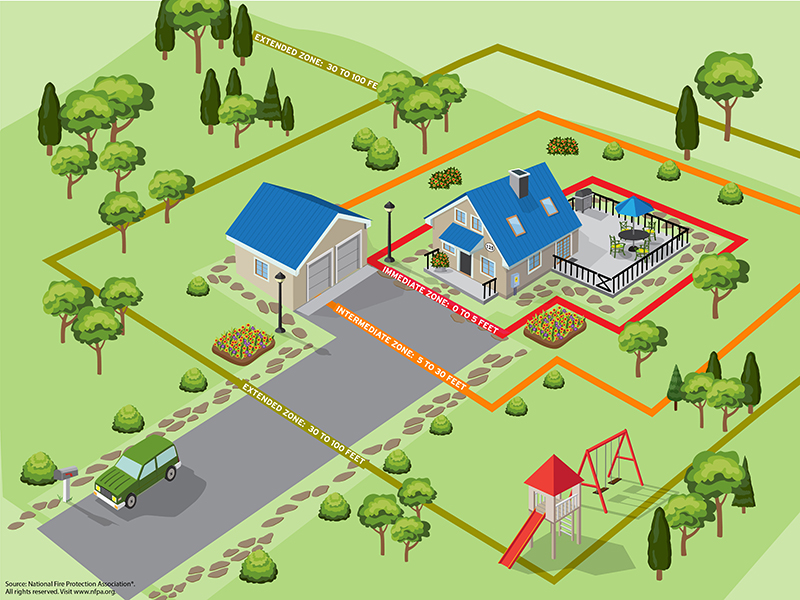
The Home Ignition Zone is divided into three working areas:
- Immediate Zone (0–5 feet)
- Intermediate Zone (5–30 feet)
- Extended Zone (30–100+ feet)
Each zone plays a different role, but they all work together to reduce ignition from embers, flames, and heat.
Programs like Firewise USA, the Colorado State Forest Service, and Ready, Set, Go! all reinforce this same concept: start at the home and work outward to reduce risk step by step.
Zone 1: Immediate (0–5 feet)
The Most Important Zone
This is the area where homes are most vulnerable. If embers land here, ignition can happen quickly.
Goal: Create a noncombustible buffer directly around your home.
Key Actions:
- Remove mulch, leaves, pine needles, and other debris
- Keep roofs and gutters clean
- Avoid storing firewood or combustibles next to the home
- Clear under decks, porches, and stairs
- Use gravel, pavers, or other noncombustible materials
Research shows that conditions in this zone have the greatest influence on whether a home ignites.
Zone 2: Intermediate (5–30 feet)
Reduce Fire Intensity
This zone is designed to slow fire and reduce its energy before it reaches your home.
Goal: Break up fuel continuity and create defensible space.
Key Actions:
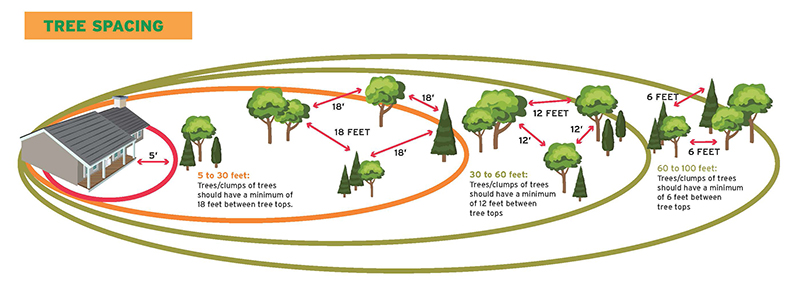
- Space trees and shrubs apart
- Remove ladder fuels that allow fire to climb into tree canopies
- Keep grass trimmed and maintained
- Trim branches away from structures
- Use driveways, patios, or paths as fuel breaks
Managing this zone helps influence fire behavior, making it less intense and easier to control.
Zone 3: Extended (30–100+ feet)
Interrupt the Fire’s Path
This outer zone focuses on reducing overall wildfire intensity as it approaches your property.
Goal: Keep fire lower to the ground and less severe.
Key Actions:
- Thin dense vegetation and trees
- Increase spacing between tree canopies
- Remove dead trees and heavy debris
- Reduce buildup of needles, leaves, and woody material
This zone helps slow the spread of wildfire and reduce radiant heat exposure near your home.
Why It Matters
Creating and maintaining your Home Ignition Zone:
- Reduces the likelihood your home will ignite
- Limits fire spread between properties
- Improves firefighter access and safety
- Protects your neighborhood, not just your structure
Defensible space works because it changes how fire behaves. It reduces fuel, breaks continuity, and lowers intensity before fire reaches your home.