
Home Hardening
What is Home Hardening?
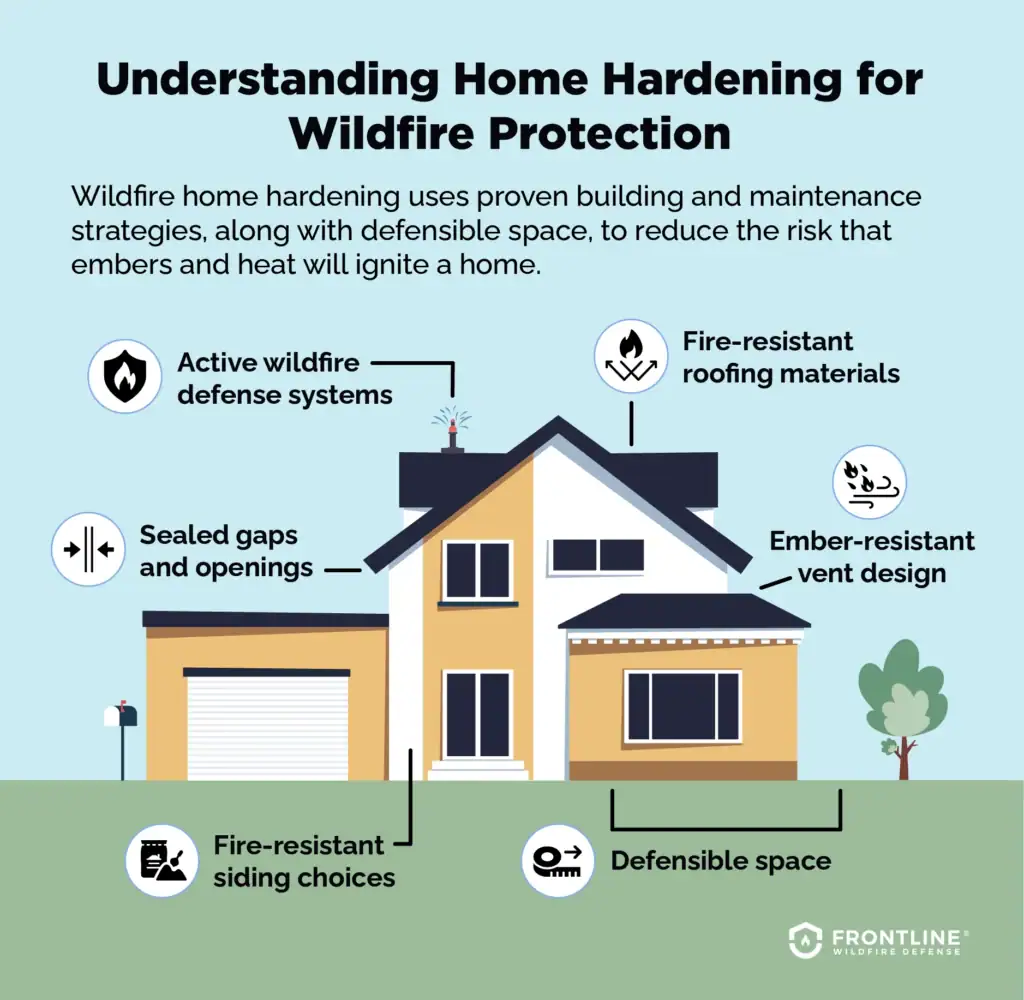
Home hardening is the process of improving your home’s ability to withstand wildfire by reducing opportunities for embers, flames, and radiant heat to ignite your structure. It involves upgrading building materials, sealing vulnerable openings, and maintaining the exterior of your home to minimize ignition hazards.
Unlike defensible space, which focuses on vegetation around your property, home hardening focuses on the structure itself. Even small improvements can make a meaningful difference, and many projects can be completed over time as part of regular home maintenance.
Roof
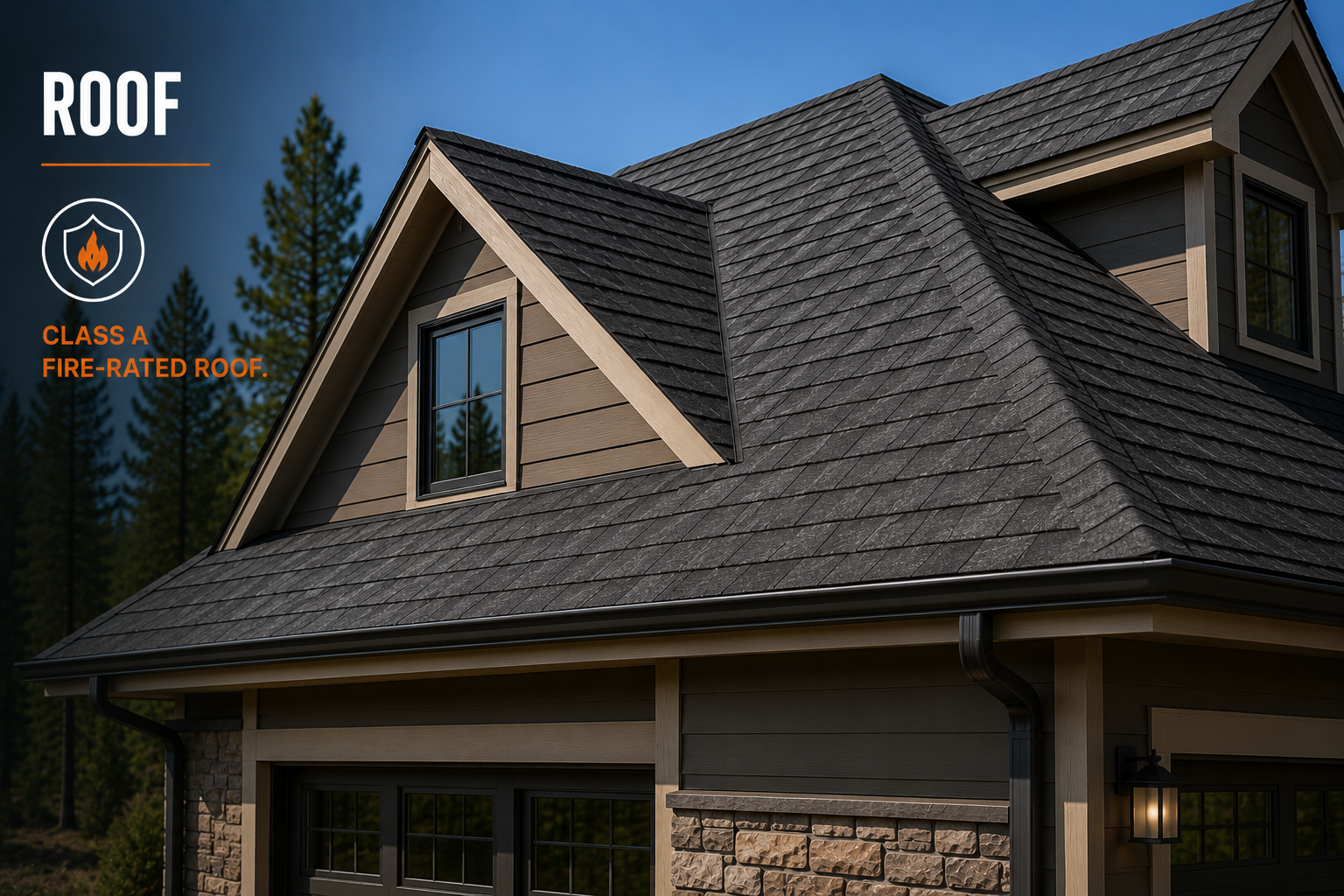
Your roof is your home’s first line of defense and one of its most vulnerable areas.
Best practices include:
- Install or replace with a Class A fire-rated roofing material.
- Remove pine needles, leaves, and debris regularly.
- Seal gaps where embers could enter beneath roof coverings.
- Inspect flashing and roof penetrations annually.
Gutters
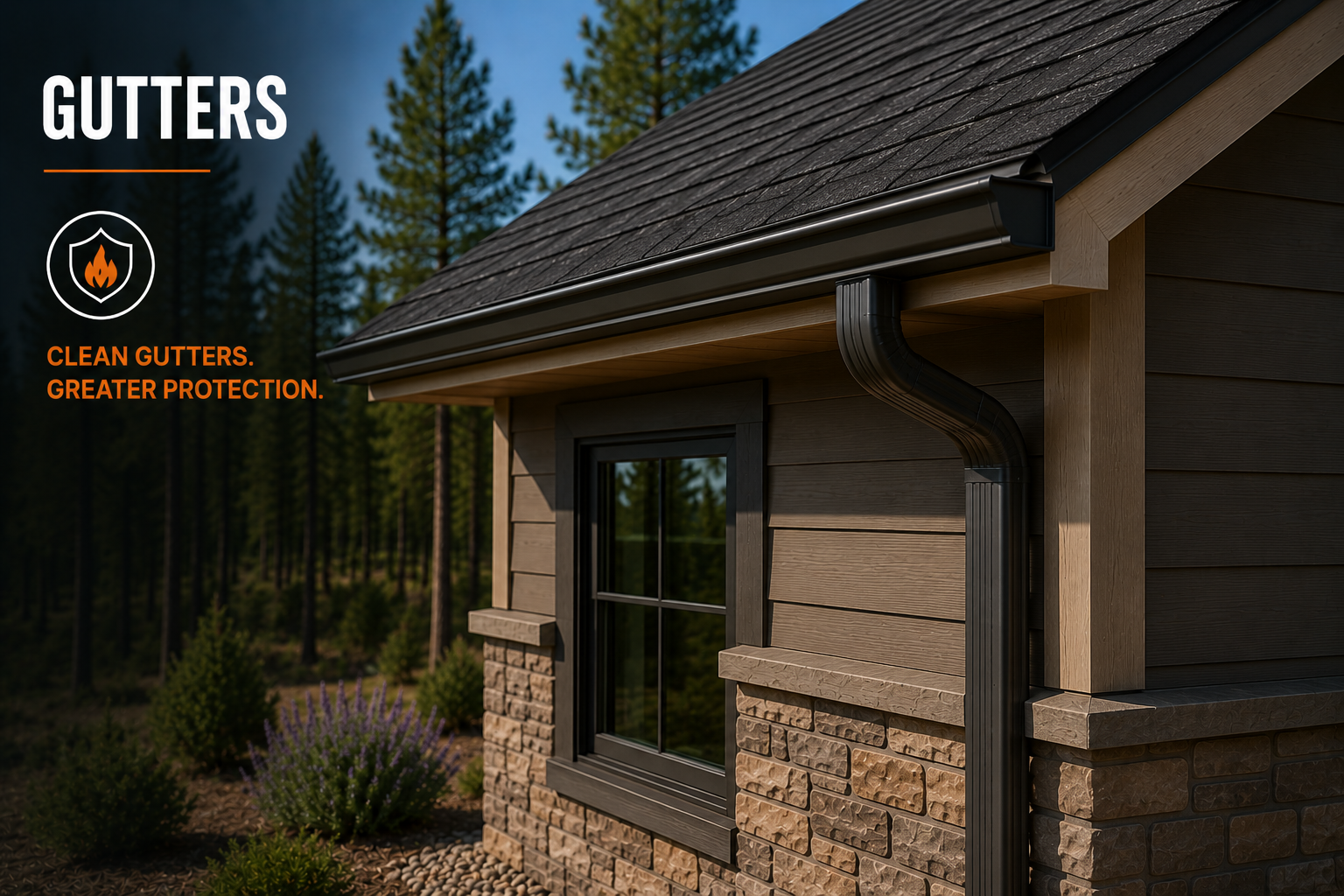
Dry leaves and pine needles in gutters create an easy ignition point during a wildfire.
Recommendations:
- Clean gutters and downspouts frequently.
- Consider installing metal gutter guards.
- Remove debris after wind events and throughout fire season.
Vents
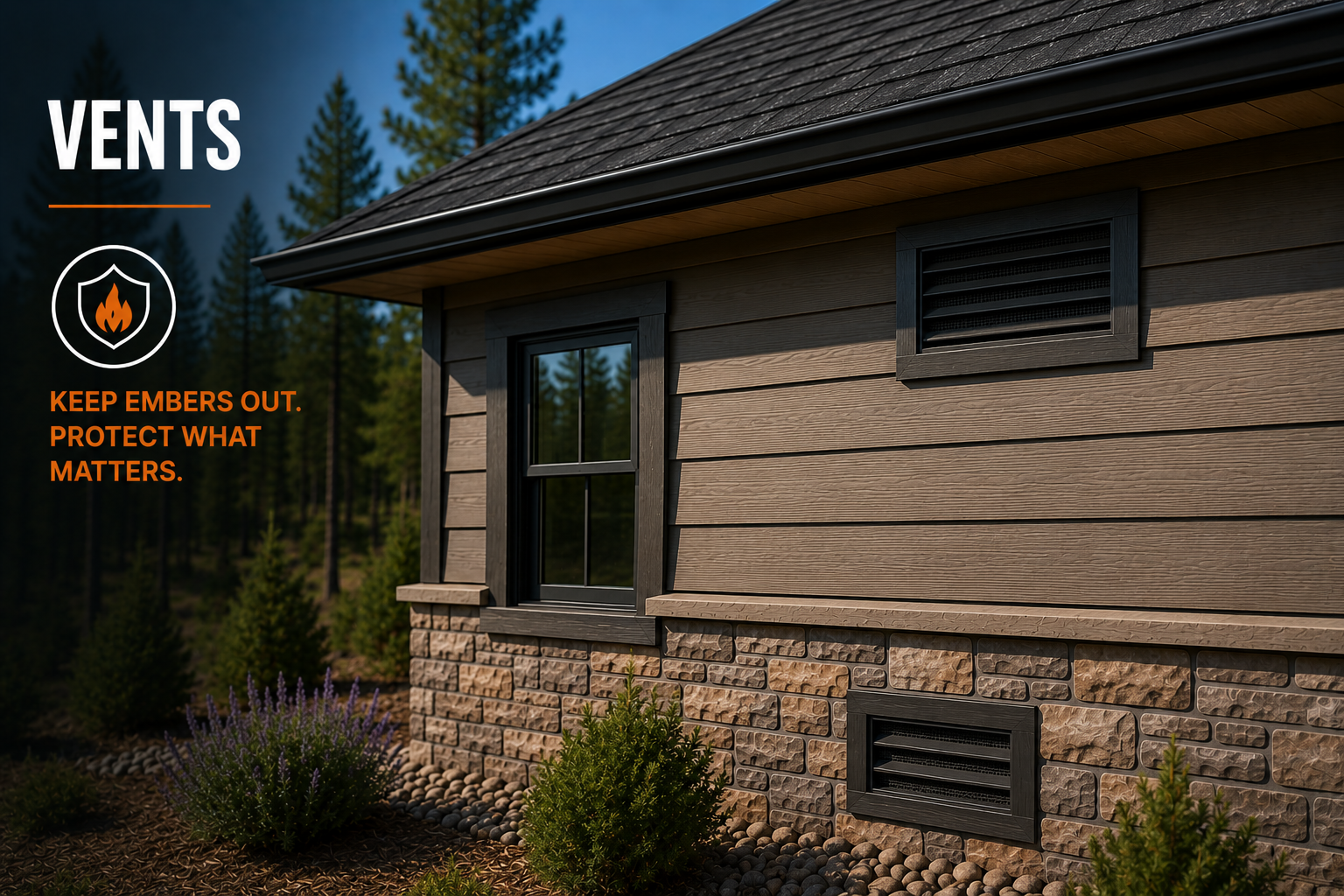
Attic, crawl space, and foundation vents can allow embers to enter your home.
Reduce ember intrusion by:
- Installing ember-resistant vents when replacing existing vents.
- Covering vents with corrosion-resistant metal mesh where appropriate.
- Inspecting vents regularly for damage or gaps.
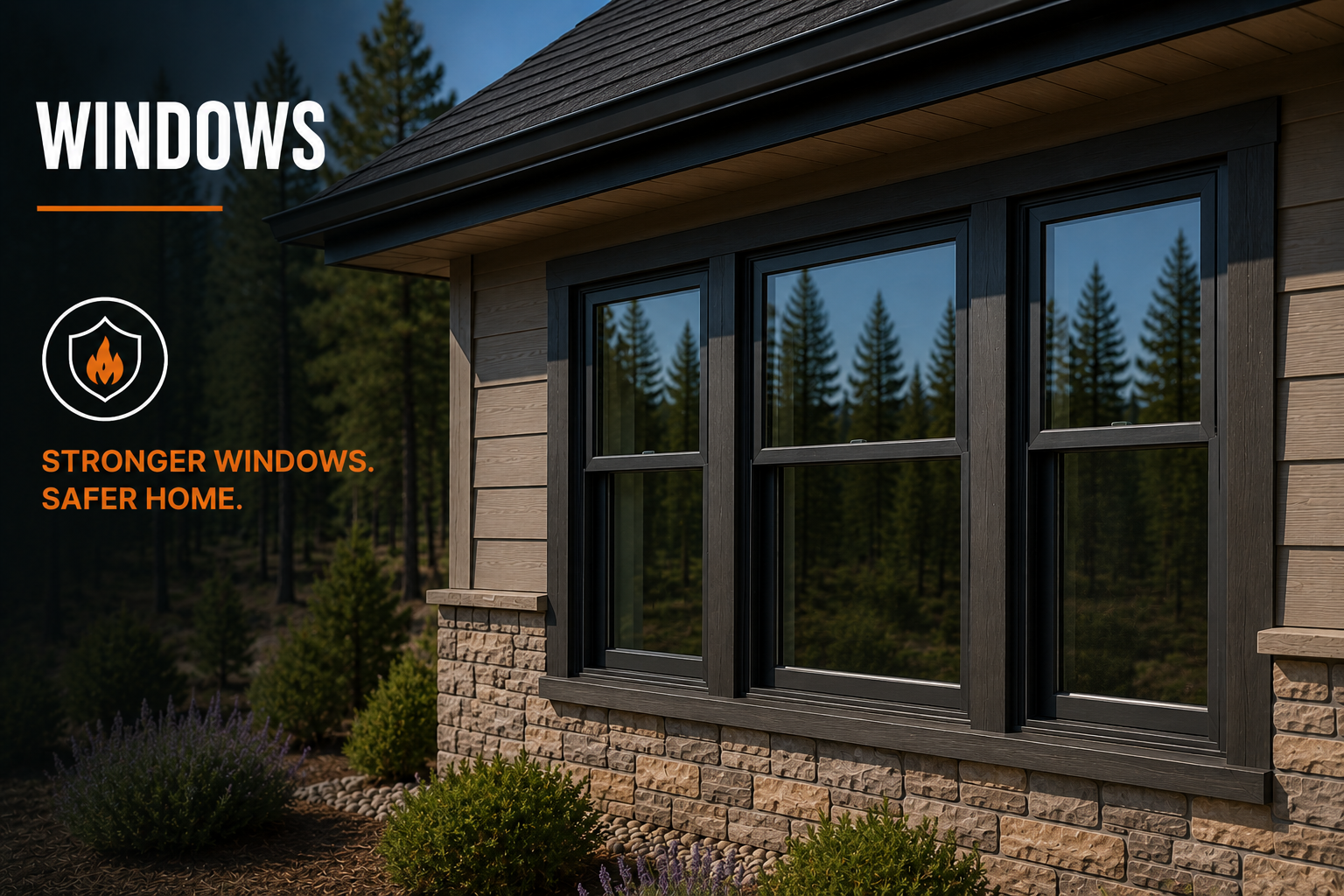
Windows
Windows are vulnerable to both radiant heat and direct flame exposure.
Improve protection by:
- Installing dual-pane windows with at least one tempered glass pane.
- Repairing damaged seals and frames.
- Using metal screens to reduce ember exposure.
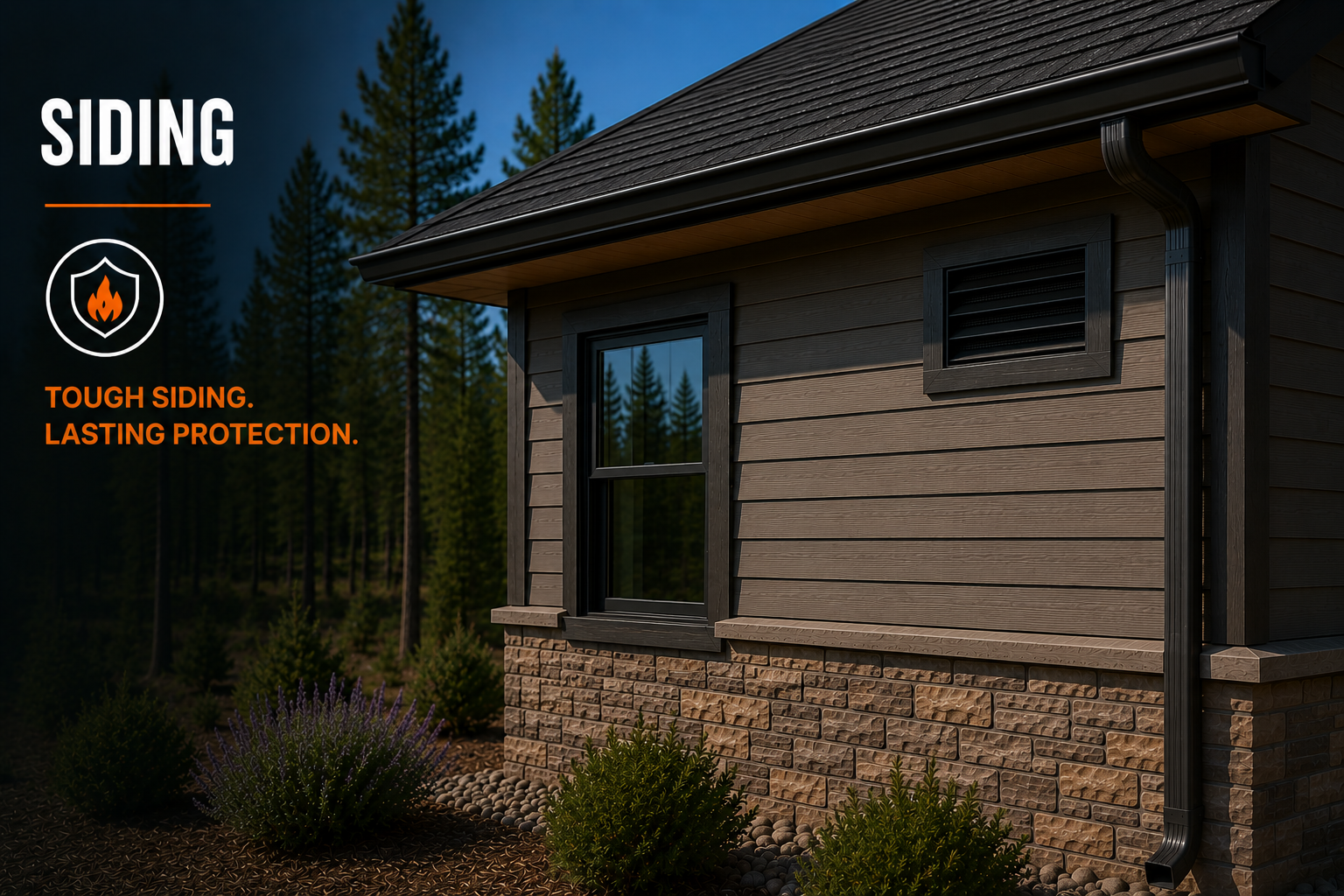
Siding
The materials covering your home’s exterior can influence how easily it ignites.
Fire-resistant options include:
- Fiber cement
- Stucco
- Brick or stone
- Metal siding
Keep siding free of accumulated debris, especially where walls meet the ground or intersect with decks and fences.
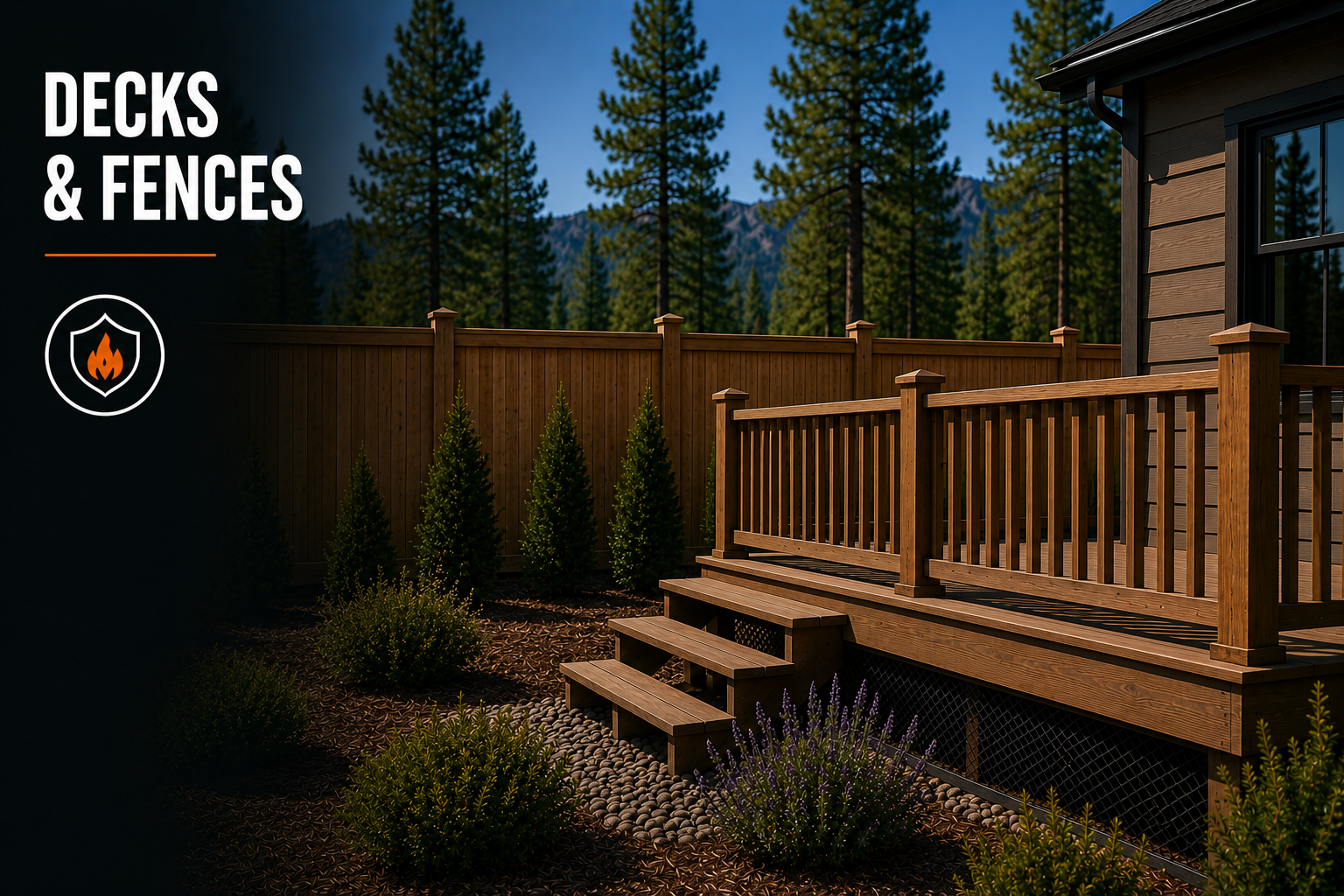
Decks & Fences
Wood decks and fences frequently ignite from embers that become trapped underneath or between boards.
To reduce risk:
- Remove leaves and pine needles from deck surfaces and underneath decks.
- Enclose the underside of elevated decks with noncombustible materials or metal mesh.
- Replace combustible materials when practical with ignition-resistant alternatives.
- Avoid storing firewood or combustible items beneath decks.
The Immediate Zone (0 to 5 Feet)
The first five feet surrounding your home is often called the Immediate Zone or Zone 0 and is one of the most important areas for wildfire protection.
Keep this area as ignition-resistant as possible by:
- Removing combustible mulch and replacing it with rock or gravel.
- Keeping plants well-spaced and maintained.
- Moving firewood, propane tanks, and combustible materials away from the home.
- Keeping roofs, gutters, patios, and decks free of pine needles and leaves.
Routine Maintenance Matters
Home hardening isn’t a one-time project. Regular maintenance is just as important as construction upgrades.
Develop a seasonal routine to:
- Clean roofs and gutters
- Inspect vents and screens
- Remove accumulated pine needles
- Trim vegetation touching the home
- Check decks, fences, and siding for needed repairs
Small maintenance tasks completed each year can greatly reduce your home’s wildfire vulnerability.
Home Hardening + Defensible Space = Your Best Protection
The most wildfire-resilient homes combine home hardening with defensible space. Reducing vegetation around your home slows wildfire spread, while strengthening the structure helps prevent embers from igniting vulnerable areas. Together, these strategies provide the greatest opportunity for your home to survive a wildfire.
